
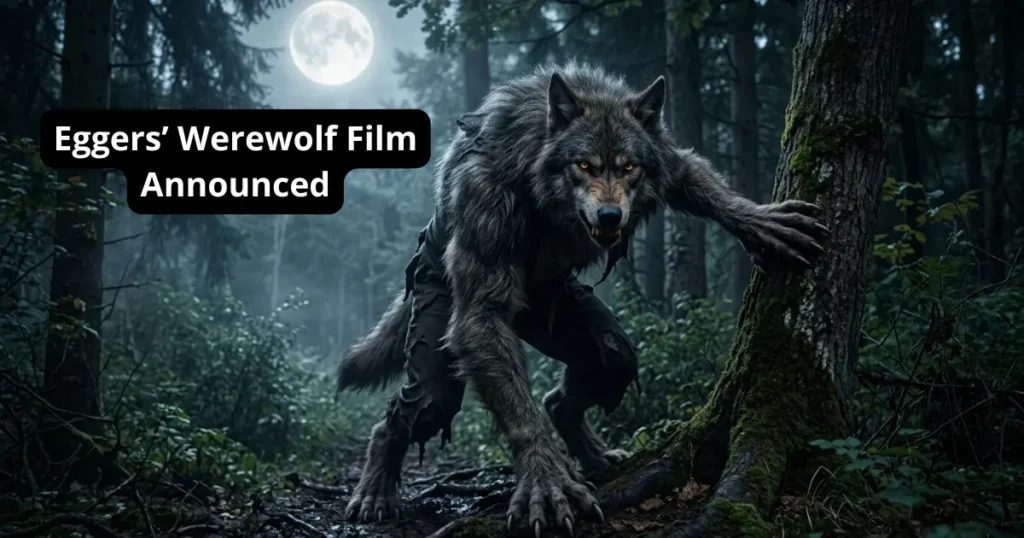
The upcoming film Werewolf from director Robert Eggers is already generating significant attention across the film industry, with early expectations pointing toward a radically different interpretation of the classic werewolf myth. Known for his meticulous historical detail and atmospheric storytelling in films such as The Witch and The Lighthouse, Eggers appears to be preparing another stylistically bold project that could redefine how audiences experience the “monster” genre.
Unlike traditional horror films that rely heavily on jump scares or modernized creature effects, early discussions around Werewolf suggest that Eggers is returning to a more grounded, almost mythological approach. The film is expected to explore the werewolf legend not as a simple creature feature, but as a psychological and cultural phenomenon rooted in ancient fears and human transformation. This direction aligns closely with Eggers’ established filmmaking identity, where atmosphere and historical authenticity often take priority over conventional horror structures.
Read Also:
Scream 7 Analysis: Is the Ghostface Horror Film Losing Its Edge in 2026?
Industry observers are already describing Werewolf as a potential turning point for the modern monster movie. Rather than focusing purely on visual spectacle, the film is expected to emphasize mood, tension, and an immersive sense of time and place. This approach has become a hallmark of Eggers’ work, where even supernatural elements feel disturbingly real due to the precision of his world-building and dialogue style.
While specific plot details remain tightly controlled, early reports indicate that the story will likely explore themes of identity, isolation, and transformation. These elements have long been central to werewolf mythology, but Eggers is expected to strip away modern interpretations and return to older, more folkloric roots of the legend. This could position the film as both a horror experience and a cultural study of how societies historically interpreted human-beast transformation.
The anticipation around Werewolf also reflects a broader trend in contemporary cinema, where audiences are increasingly drawn to elevated horror—films that blend genre storytelling with artistic ambition. Eggers has consistently operated within this space, and expectations are high that this project will continue that trajectory. For many critics, the question is not whether the film will be visually compelling, but how far it will push the boundaries of what a werewolf narrative can be.
As production continues, Werewolf remains one of the most closely watched upcoming horror projects in Hollywood. With Robert Eggers at the helm, the film is expected to offer a haunting and deeply atmospheric experience that could redefine the modern interpretation of one of cinema’s oldest monsters.